
Then and Now: Gateway’s Fit Club
One of the books I discovered for summer reading in 2007 was Spark by Dr. John Ratey. In the very first chapter, a simple idea struck me as profound: Movement changes the brain. If that was true, then exercise could be part of how we teach. We were starting a school that did not fit inside someone else’s box, so we could try something different. I walked into Dr. Joseph’s office with the dogeared book in hand, telling her everything that I had learned and all the ways that we could use it to improve our students' experience and make learning easier and more fun. FitClub began as an experiment. It has become a foundation.
Then
In the early days FitClub was loose and a little chaotic. We made do with whatever space we had, indoors or outside. Steve Tiemann remembers trying anything to help students burn energy, finally landing on ultimate frisbee as a favorite for those who needed maximum movement.
At first, students worked out in polos and khakis. It was practical for a school uniform, but far from comfortable for exercise. As FitClub grew from a 45-minute warm-up into something central to the school day, our uniforms had to change too. Athletic shirts and ADIDAS track pants or shorts eventually replaced khakis and a gym bag so students could move freely—not just during FitClub, but during breaks,lunch, or any other time that a student needed to reset their brain or burn off energy.

Dr. Joseph running the mile during FitClub (2011).
FitClub gave teachers freedom to be inventive. Dr. Joseph trusted us to try, and that trust mattered. Teachers led groups in spin bike workouts, others created and introduced students to P90x, crossfit, or team sports. We tried running laps, dancing classes, lifting weights, and even took students skiing on Lake Conroe. It was part science and part experiment, and most importantly, it was an attempt to show our students that exercise could be fun and that it helped them think and focus better.
The impact was clear. Students who had been restless came back from FitClub calm and ready. Those who were tired, foggy, or frustrated suddenly had energy. Day after day, we saw movement unlock focus and set the tone for learning.

Mr. Adams teaching group exercise (2011).
Our approach had a scientific impact as well. In 2016, the University of Texas Medical Branch in Galveston partnered with us to study the impact of FitClub on our students. The findings confirmed what we already knew: neurodiverse students greatly benefit from structured, physical programs.
https://clinicaltrials.gov/study/NCT03934879
The program was even featured on ABC 13 here in Houston! Check out the early days of FitClub here: https://abc13.com/post/gateway-academy-working-out-for-student-success/1266631/?utm_source=chatgpt.com
Now
FitClub today is integrated into everything we do. It is not a warm up tacked on to the schedule. It is a scheduled movement that primes students to learn. We offer team sports (basketball, cheerleading, and track), yoga, strength work, cycling, martial arts and mindful movement.
The payoff shows up in small ways and big ones. Students manage stress more effectively. Classroom transitions are smoother. Confidence grows when someone who could not finish a mile at first completes it the next month. That confidence carries into internships and classroom presentations. FitClub helps students regulate their bodies so their minds can do the work we ask of them.
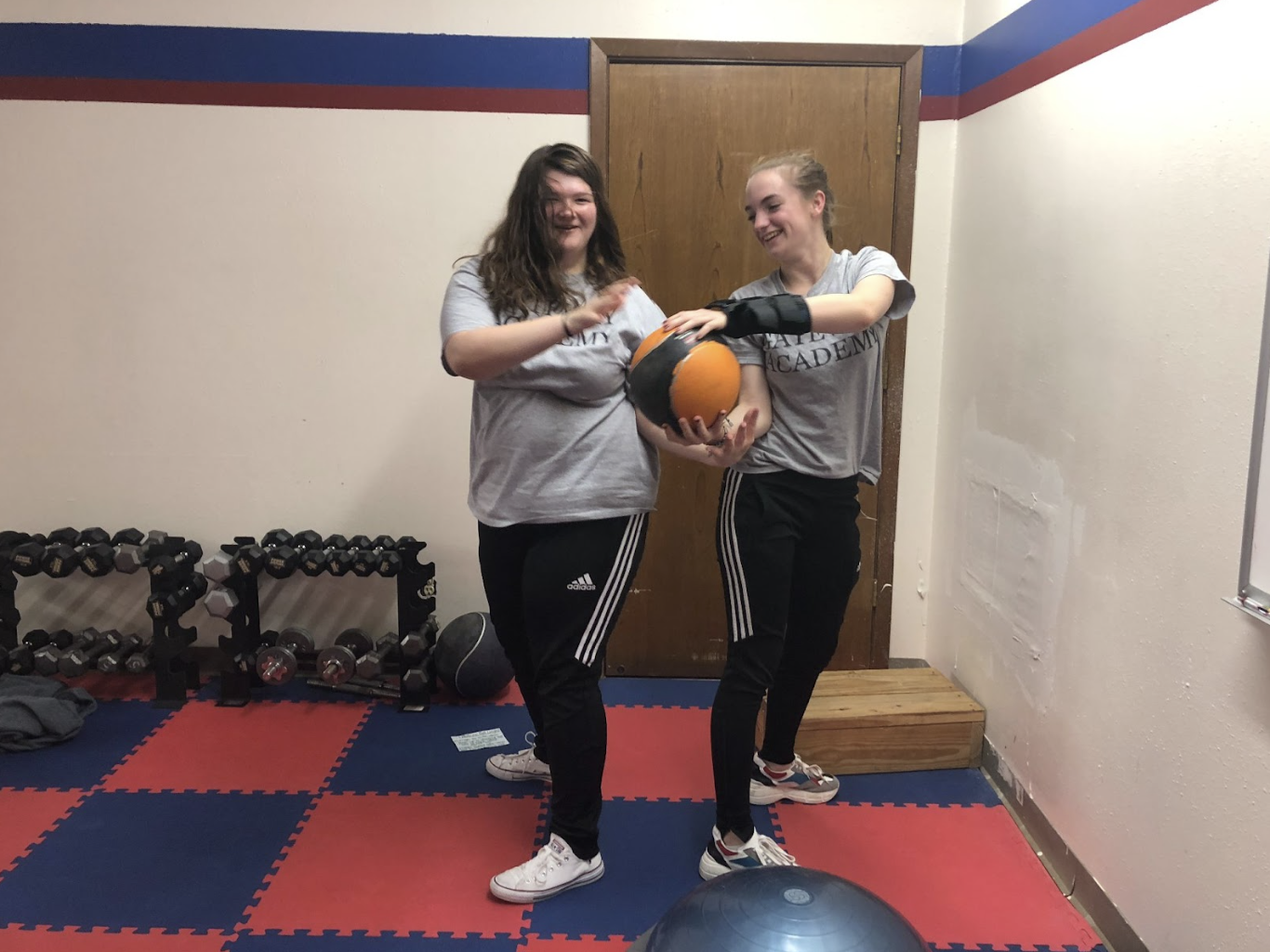
Weight lifting, a mainstay in Gateway FitClub (2018).
FitClub still carries an important approach for Gateway: be flexible (physically and mentally!). We do not pin rules to the wall and expect every student to fit them the same way. Movement gives each student an onramp into learning. It gives teachers options and students opportunities.
As Gateway turns twenty, FitClub is a reminder of what made us different at the start. We tried an idea because we believed it might help.
It did.

Yoga can build calm bodies and minds by improving balance, focus, and self-regulation in a fun, supportive way (2018).
Today, movement is part of our DNA. We start every day with it and it is the first option we provide a student when they are looking for ways to self regulate. It helps students show up, engage, and take steps toward independence.
If you stop by Dacoma on any given morning you will see it: kids warming up, laughing, offering their best effort, and, most importantly, walking into class ready to work and grow. That is what FitClub was always meant to do. It makes learning possible.
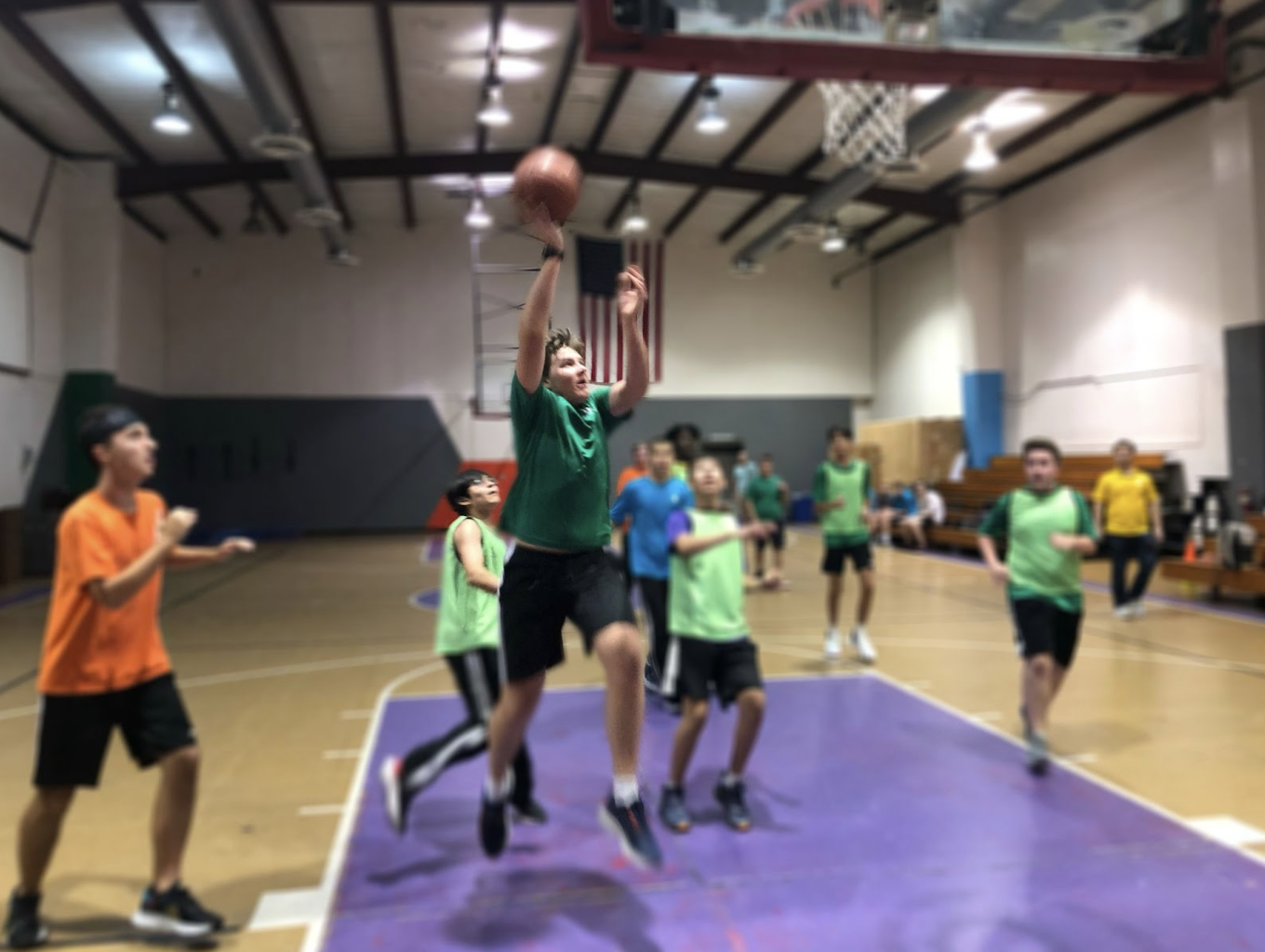
Learning team sports like basketball is a fun, social way to build coordination, teamwork, and confidence through fast-paced play (2022).